About
Teams > Lund members
Current members
Malin Sjödahl (Team Leader)
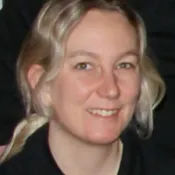
Malin Sjödahl is an assistant professor in Lund and works with improving parton showers with sub-leading Nc contributions.
Christian Bierlich
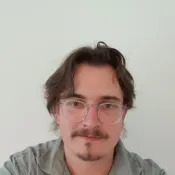
Christian Bierlich is a researcher mainly working on heavy-ion related processes in the Pythia8 program, of whihc he is also a co-author.
Rikkert Frederix
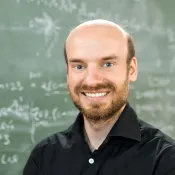
Rikkert Frederix is an assistant professor working in the MadGraph program.
Gösta Gustafson
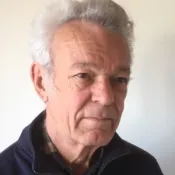
Gösta Gustafson is a professor emeritus. He is one of the fathers of the Lund Model for hadronisation.
Albi Kerbizi
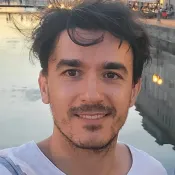
Albi Kerbizi is a MSCA postdoc and member of the Pythia team working on spin effects in the string fragmentation model in Pythia8.
Leif Lönnblad
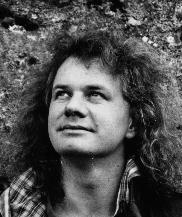
Leif Lönnblad is the team leader for the Lund group and is the author of ThePEG and the Ariadne program and co-author of the Pythia8 program. He is also involved with the Rivet program developed within the Cedar project.
Torbjörn Sjöstrand
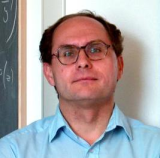
Torbjörn Sjöstrand is a professor emeritus and the main author of the Pythia program. His research covers almost all aspects of multiparticle production, mainly at e+e-, ep and pp colliders. He is a member of the MCnet advisory committee.
Korinna Zapp
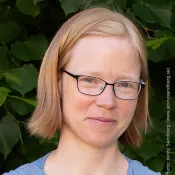
Korinna Zapp is an assistant professor working on various aspects of heavy ion collisions. She is the author of the JEWEL program for simulating jet quenching effects.
Torbjörn Lundberg
Torbjörn Lundberg is a PhD student working on the development of hadronisation within the Pythia project. In particular he is developing a colour reconnection model to describe collective effects in heavy-ion collisions in terms of string and dipole interactions within the Lund model and implement the this in Pythia8.
Former members
Johannes Bellm
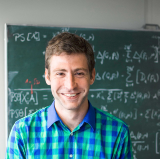
Johannes Bellm was a postdoc since 2017-2018. His research topic wa the matching and merging of higher order calculations at fixed order with the parton shower in Herwig.
Smita Chakraborty

Smita Chakraborty was a MCnetITN3 PhD student working on the development of hadronisation within Pythia.
In particular, the first project was to develop a string “shoving” model to describe collective effects in heavy-ion collisions in terms of string interactions within the Lund model. This is done by constructing the Lorentz transformation to a symmetric frame where two string pieces are in parallel planes to calculate the resulting pairwise force due to the space-time overlap. Considering all such pairs of string pieces in a collision, the resulting total momentum change on a string piece is calculated. There is ongoing work to implement this along with the rope hadronization model in Pythia8.
Leif Gellersen
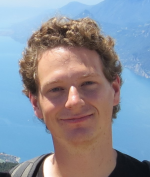
Leif Gellersen was a postdoc and a former MCnetITN3 PhD student involved with the Pythia project. His project involves the improvement of parton showers through correction with additional matrix elements. A first project was related to tuning of Monte Carlo event generators. Another project is the implementation of scale and scheme variations in UNLOPS merging, which are now implemented in Pythia 8. Further work is directed towards the implementation of matching and merging to higher orders and higher precision, which is anticipated to be of high relevance for future precision measurements, especially at electron positron colliders. Last but not least, he works on fixed colour parton showers with matrix element corrections within the DIRE parton shower, which will be of interest for studying interference effects between QCD, QED and dark photon signatures, and can be used in the context of event deconstruction.
Chiara Le Roux
Andrew Lifson
Christopher Plumberg
Stefan Prestel
Stefan Prestel was a lecturer mainly working on matching matrix elements with parton showers.
Andrecia Ramnath
Christine Rasmussen
Christine Rasmussen is a former PhD student on the Pythia project.
Christian Reuschle
Harsh Shah
Harsh Shah wss a PhD student mainly working on heavy-ion applications of the Pythia8 programs.
Robin Törnkvist

Robin Tornkvist was a PhD stident working with Korinna Zapp on a kinetic theory-based model of Quark-Gluon Plasma effects.
Marius Utheim
Marius Utheim is a former MCnetITN3 PhD student working in the Pythia project with hadron rescattering. In the current implementation of Pythia, after hadrons have been produced in the hadronization stage in Pythia and Bose-Einstein corrections have been made, the outgoing hadrons no longer interact with each other. This is despite the fact that realistically one would expect hadronic rescattering, i.e. hadrons colliding and interacting with each other in processes like elastic and resonant scattering. These interactions have never been implemented because they have been thought to have little effect on the observable distributions. However, more recently it has been suggested that they can havenon-negligible contribution in high multiplicity events after all. One effect that might be observed is increased pT for heavier hadrons, similar to the collective behaviour seen in quark-gluon plasma.
This project is about implementing of hadronic rescattering in Pythia and studying how it affects the event. One particularly central part of this simulation is calculating cross-sections for various low energy (<10 GeV) processes. Once this has been implemented, the underlying mechanisms can also be used to make Pythia more accurate when simulating collisions where the original beam particles have low energy.